
- About Us
Who are we
What are we doing
Our Impact
- Support us
- About Us
Who are we
What are we doing
Our Impact
- Support us

- About Us
Who are we
What are we doing
Our Impact
- Support us
Adaptation Fund
Increasing climate resilience in San Cristóbal Province, Dominican Republic

Location
Saint Christopher
Fechas
June, 2019 – June, 2023
Budget
US$9,953,692.35
Contribution
US$9,953,692.35
Theme
Integrated water resources management and rural development with two components:
Community-level implementation of climate-resilient water resource management activities.
2. Creación y desarrollo de capacidades en instituciones y comunidades clave para gestionar los riesgos relacionados con el cambio climático a largo plazo
Funded by

El objetivo principal del Programa es aumentar la resiliencia y la capacidad de adaptación a los impactos y riesgos climáticos sobre los recursos hídricos de las comunidades rurales de la provincia de San Cristóbal
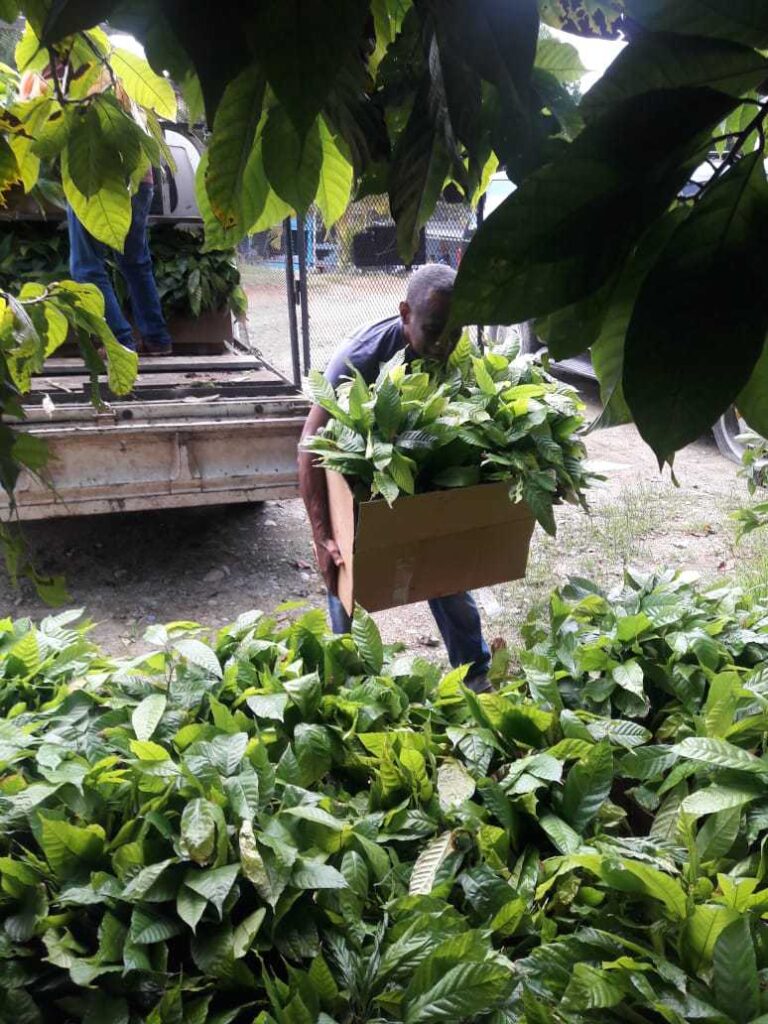
The project's contributions to increasing resilience and adaptation to climate change in San Cristóbal Province are: increasing institutional and community capacity for coordinated integrated water resource management; construction of community aqueducts for potable water supply; livelihood diversification through the establishment of model agroforestry farms; and the participation of women in leadership and empowerment for community development.
Community-level implementation of climate-resilient water resource management activities.
1.1. Community water supply and management plans developed for 30 communities to incorporate climate change-related risks.
1.2. Increased water supply for multiple uses and users in 30 communities during the early period under climate impacts (such as droughts, heat stress, etc.).
1.3. Water conservation measures under climate impacts (such as watershed/riparian areas, afforestation schemes) implemented for 2,722 hectares
Capacity building for key institutions and communities to manage long-term climate change risks.
2.1. A set of manuals and other materials on best practices for water management and resilient livelihoods is developed, including a fully operational website.
2.2. The Provincial Committee for Monitoring Climate Change Adaptation is established in San Cristóbal.
2.3. Learning platforms and systems to integrate climate change-related risks into community water resource management and institutionalized livelihood activities in 30 communities.
Financing
The Adaptation Fund is an international fund that finances projects and programs to help developing countries adapt to the impacts of climate change. It was established under the Kyoto Protocol of the United Nations Framework Convention on Climate Change.
The Adaptation Fund has accredited the (IDDI) as a National Implementing Entity (NIE), which means that the Dominican Republic, as a developing country, will have access to resources for the execution of programs and projects that contribute to combating and addressing the effects of climate change.

24,000 people
directly
42,600 people
indirectly
Impact
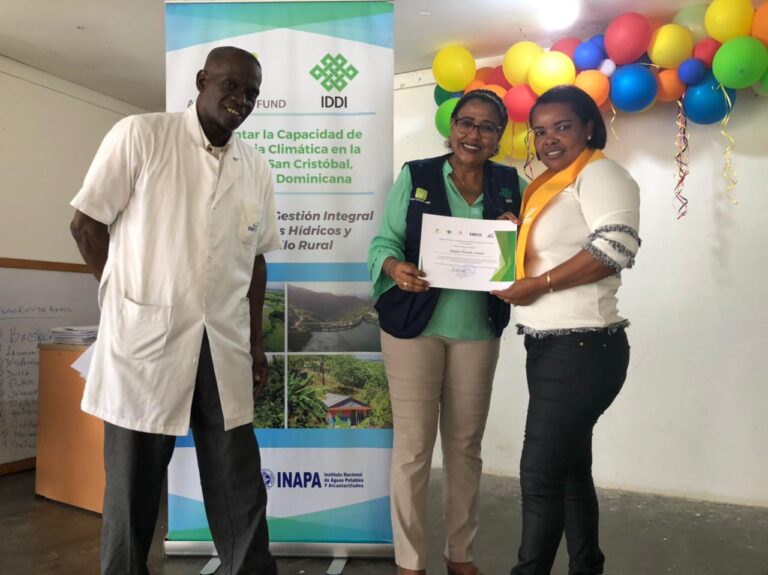
Improvement of water supply to 30 communities.
Water conservation measures under the impacts of implemented for 2,722 hectares
Provincial Committee for Climate Change Adaptation Monitoring in San Cristóbal.
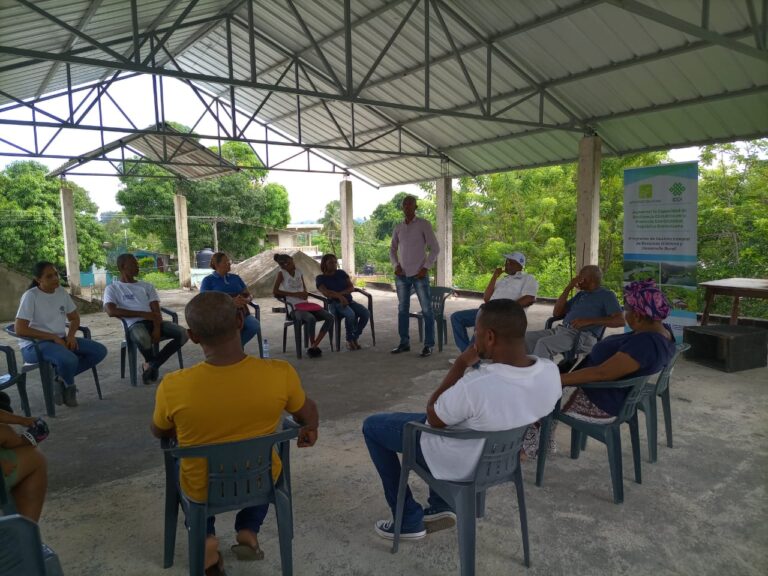
Learning platforms and systems for integrating climate change-related risks into community-based water resource management and institutionalized livelihood activities in 30 communities.
Development goals sustainable
Meta 1.5
meta 2.4
meta 5.a
metas 6.1, 6.4, 6.5, 6.6 y 6.b
meta 9.1
metas 11.5, 11.6 y 11.b
metas 12.2, 12.4 y 12.5
metas 13.1, 13.2, 13.3, 13.1 y 13.b
metas 15.2, 15.3, 15.4, 15.5 y 15.b
metas 16.7, 16.10 y 16.b
The program will directly work with 5 of the 6 strategic axes listed in the PNACC-DR:
Improve water security and food security.
Promote climate-resilient built environment and infrastructure.
Promover comunidades saludables
Increase the resilience of ecosystems, biodiversity, and forests.
Enabling competitiveness through environmental sustainability and climate resilience.
Ensuring inclusion, human rights, and the care of the environment and biodiversity
The Environmental Policies of the Adaptation Fund and IDDI have the common objective:
- Ensure that disadvantaged or vulnerable people and groups have access to the benefits generated by the project in an inclusive manner, adhering to the legal framework and continuously defending human rights.
- Recognize the importance of strengthening national environmental and social management systems, support dialogue with all stakeholders, capacity building for management, and good practices.
- Increase transparency and improve project design and execution through continuous stakeholder engagement and information disclosure, for which engagement plans are developed and documents related to environmental and social issues are published.
Woman as a factor of change
The term “gender” has gained significant presence in academic, educational, and media spheres, among others, and at times, it has been emptied of meaning, even becoming a controversial topic. However, at IDDI, we know that its proper understanding and management can help us open doors to transformative action that rescues the person in their integral dimension and has social inclusion and justice as its horizon.
There is a complex matrix of interrelationships between the effects of climate variability and economic, social, environmental, and gender aspects. Climate change involves, on the one hand, a disproportionate increase in women's workload. On the other hand, they play a fundamental role in the use of land and water, and generally, of biodiversity resources. In other words, women, through empowerment and the promotion of their leadership, can significantly contribute to providing solutions to confront climate change and be agents of change.
With the commitment at the directorial level of IDDI, as well as the valuable contribution of our collaborators, partners, and friendly institutions, the necessary mechanisms, financial resources, and technical support will be put in place to efficiently and effectively ensure gender equality through our programs and projects.
Information and Transparency Mechanisms.
Information is the fundamental basis for the participation of social actors. Therefore, clear, relevant, timely, and culturally appropriate information will be provided to local authorities and institutions, as well as interested actors, regarding the purpose, nature, and scope of the project, the entity responsible for it, the activities that will be carried out for its design and execution, the studies that will be conducted in the area, and the planned schedule.
El IDDI dispone de un mecanismo que le permite recibir y responder con eficiencia y rapidez las peticiones, quejas o reclamos descritos en la GUÍA PARA LA IMPLEMENTACIÓN DE MECANISMOS DE INFORMACIÓN Y TRANSPARENCIA PARA EL MANEJO DE PROGRAMAS Y PROYECTOS DEL IDDI y el REGLAMENTO DEL COMITÉ DE QUEJAS, RECLAMOS Y SUGERENCIAS que estarán a disposición en todas las etapas del ciclo del proyecto. El mismo garantiza la transparencia y la privacidad de las personas y será consensuado con la población local.
Products of project
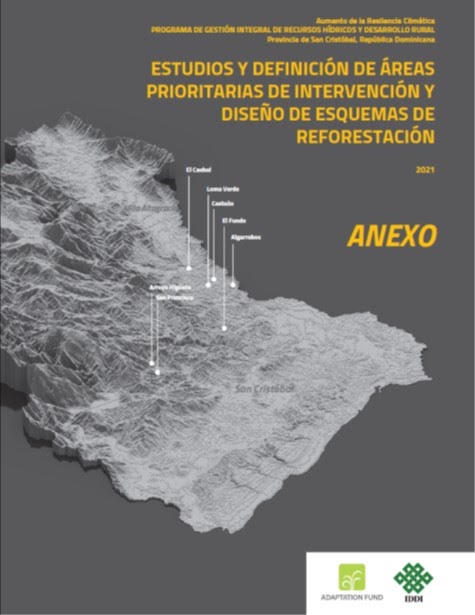
Estudios y Definición de Áreas Prioritarias de Intervención y Diseño de Esquemas de Reforestación en las Zonas de Intervención del Proyecto en la Provincia de San Cristóbal – RD



Any questions?
The IDDI is working hard to contribute to the transformation of human beings, their families, and the community in which we live.
Faced with a common problem, we are all the solution.